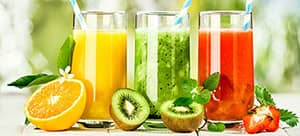
Fruit Juice and Concentrate Production Process
Fruit juice is a liquid that is naturally obtained from fruits or vegetables. Juice is prepared by pressing fruits and vegetables, or by soaking them, without the use of heat or solvents. For example, orange juice is prepared from orange extract. Juice can be made at home from fresh fruits and vegetables using manual or electric juicers.
Juices sold on the market usually have the fiber or pulp separated from the juice. In juice production, stabilizers such as pectin, CMC, and xanthan gum are used to increase body/viscosity as well as to improve nutritional properties, mouthfeel, and flavor.
To produce juice, nectar, and fruit syrup, the fruit is first converted into concentrate, and the desired products are then obtained from the concentrate. The reason for converting juice into concentrate — and then converting it back into juice for the consumer — is that concentrate is easier to store, due to its smaller volume compared to juice.
Types of Fruit Juice Packaging:
Currently, industrial fruit beverages are found on the market packaged in glass, metal, plastic, and cardboard bottles, as well as multi-layer aluminum pouches, in various flavors and brand names.
According to the standard, fruit beverages are classified into three categories:
Juice:
This is a product obtained with 100% juice content, produced by pressing fruit or natural fruit purée, or by diluting concentrated juice (concentrate) with potable water until the desired concentration is reached. For sour fruits such as sour cherry and pomegranate, sugar may also be part of the formulation.
Nectar:
This is obtained from a mixture of natural fruit juice — or its equivalent in concentrate or fruit purée (purée being essentially the flesh of the fruit, mashed after the pit, stem, and skin have been removed) — together with water, sugar, and other permitted additives (food-grade acid, etc.). This product contains a lower percentage of juice than juice itself; the minimum juice content ranges from 30% to 50% depending on the type of fruit.
Still Fruit Drink:
In terms of juice content, this product contains at least 20% juice — or its equivalent in concentrate and water — and contains other ingredients such as sugar, food-grade acid, flavoring, and natural food coloring.
Only natural sweeteners are permitted in these products, including sucrose (sugar), glucose, fructose, invert syrup, and high-fructose corn syrup.
Machinery for Complete Juice and Syrup Production Lines:
1- Concentrate discharge system 6- Pasteurizer
2- Turbo mixer 7- Homogenizer
3- Sugar dissolving tank 8- De-aerator
4- Sugar elevator &nbs