Natamycin in Food Industries:
What is Natamycin?
For most of us, natamycin is a very familiar term, as we are either the sellers or consumers of it. Here, we intend to provide a brief explanation about the preservative natamycin for those who are not familiar with this substance:For more details about Natamycin from Dayan Arman PouyaClick here.
Natamycin Standard:
Natamycin or Pimaricin with the international standard number E=235 is one of the natural preservatives used in the food industry, derived from the microbial fermentation of Streptomyces natalensis under a controlled deep fermentation process. It is also approved by Codex (8-39-7681): CAS
How is Natamycin Produced?
After extraction, the obtained natamycin is centrifuged, filtered, and washed to ensure that the final product is pure and of high quality.
At what pH range does Natamycin work?
Natamycin is slightly soluble in water, is a tasteless and colorless preservative, and compared to chemical preservatives, it is less dependent on pH for its efficacy. It works in a wide pH range from 3 to 9, thus making it useful for a wide variety of food products from acidic to neutral and alkaline. Natamycin is also effective at concentrations below 10 ppm against most molds.For more details about Natamycin from Dayan Arman PouyaClick here.
Is Natamycin a Powder?
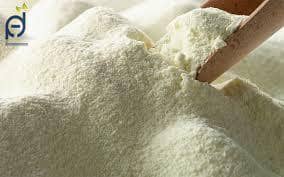
Natamycin appears as a white to yellow crystalline powder, odorless and colorless, with three water molecules. Its solubility in water ranges from 30 to 100 milligrams per liter. It dissolves slowly in methanol and is also soluble in glacial acetic acid and dimethylformamide.
How is Natamycin supplied?
Natamycin is produced in both liquid and powder forms. One of the major advantages of using natamycin instead of other chemical preservatives is its ability to be used as a powder in formulations or as a liquid suspension mixed with saltwater and sprayed onto the product.
Is Natamycin Pure?
The powdered form of natamycin can be produced as completely pure or combined with a carrier substance in a 50/50 mix. The carrier could be lactose, Nacl salt, maltodextrin, and so on.
How does Natamycin prevent mold growth or carbonation in products?
It may be interesting to know how natamycin acts as a preservative. Natamycin targets ergosterol in the cell wall and causes its destruction, preventing food from reaching the cell. Ergosterol forms a structural barrier against mold and yeast in the cell wall, which is responsible for the transport of nutrients within the cell. Therefore, it is important for the survival of mold and yeast. Natamycin breaks down this barrier, leading to the destruction of mold and yeast.For more details about Natamycin from Dayan Arman PouyaClick here.
Does Natamycin affect bacteria?
In response to this question, it can be said that since ergosterol is absent in bacterial cell walls, this preservative has no effect on bacteria.
What is the molecular formula of Natamycin?
The molecular formula of Natamycin is C33H44NO13, with a molecular weight of 665.75 and the IUPAC name is 22-(3-amino-3,6-dideoxy-B-D-mannopyranosyl) oxo-1,3,26-tr