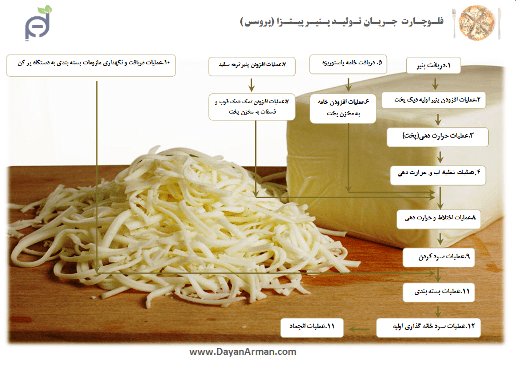
Pizza Cheese Production Process (with Starter Cheese)
First, the starter cheese that has been prepared earlier and has reached the desired pH is placed into the cooking tank. While stirring, we heat the cheese until it becomes stretchy and releases excess water (Explanation: Initially, the casein in the cheese is in the form of diparacasein calcium, and over time, due to heat and the production of lactic acid, it transforms into the form of monoparacasein calcium, which causes the stretching in the cheese). Then, the water is removed, and necessary ingredients such as cream, soft cheese (including feta cheese, cream cheese, or aged cheese in brine), which are typically factory waste, are used to avoid extra costs or product waste during cooking. These ingredients should be added in three stages. Then, table salt and melting salts (phosphates and citrates) are added, and the heating process continues until the pizza cheese is ready. The readiness of the cheese can be determined by the following methods:
1- A piece of cheese is pulled by hand to determine its stretchability, and it should not break. It should also form a stringy texture in the horizontal direction.
2- The surface of the cheese inside the cooking tank is very shiny and transparent, and large bubbles sometimes appear on its surface, known as “cow’s eyes”.
3- If a piece is tested in the mouth, it can be easily chewed and does not have a tough or rubbery texture.
The prepared pizza cheese is cut into the desired weight, allowed to cool slightly, then moved to the above-zero cooling section and later transferred to below-zero. After that, it is moved to the packaging section for grating or slicing.